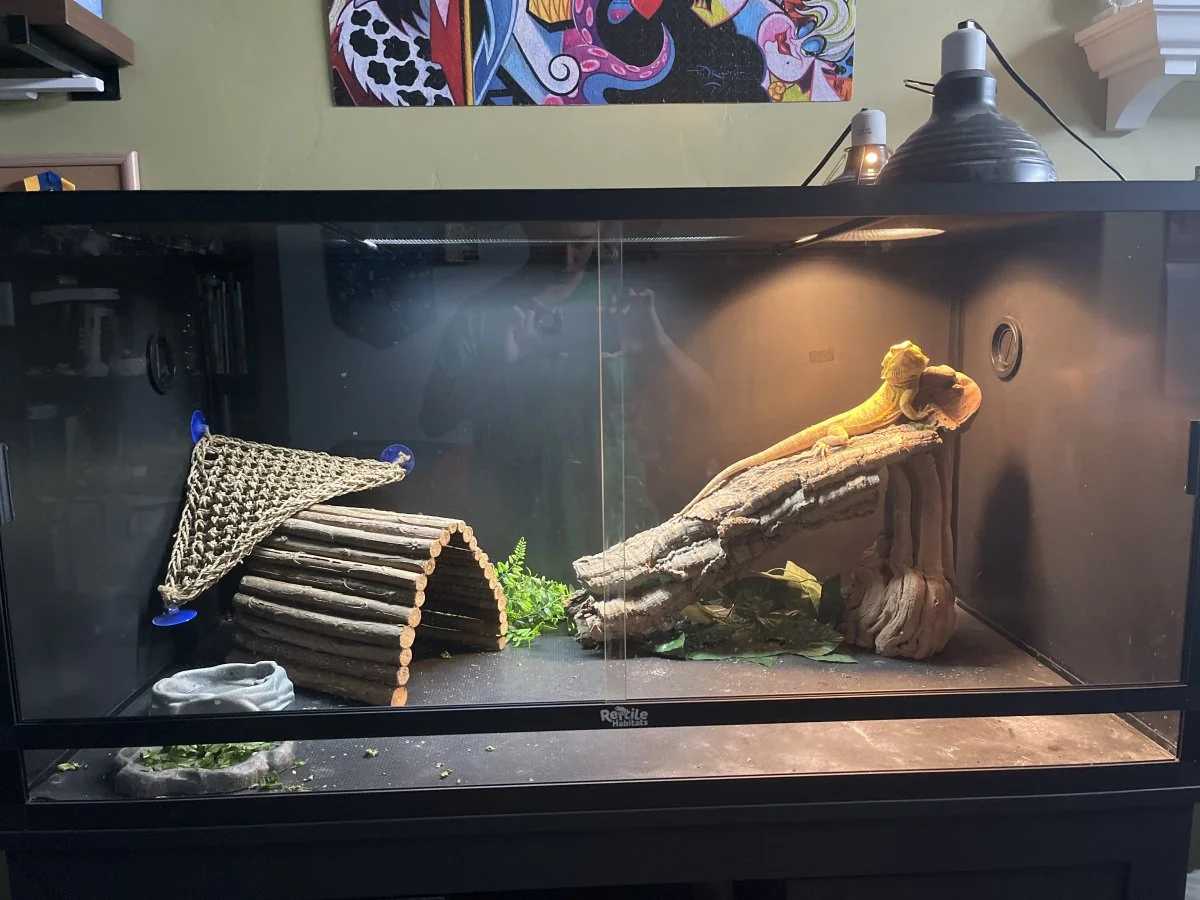
Choosing the Right UVB Bulb
Providing the correct UVB lighting is crucial for the health and well-being of your bearded dragon. UVB (ultraviolet B) radiation is essential for the synthesis of vitamin D3, which in turn allows your dragon to absorb calcium from its food. Without proper UVB exposure, bearded dragons can develop metabolic bone disease (MBD), a serious and potentially fatal condition. Choosing the right UVB bulb is the first and most important step in setting up your bearded dragon’s new enclosure. This decision depends on several factors, including the size of the enclosure, the basking distance, and the specific UVB requirements of your dragon. It’s essential to research the available options and select a bulb that meets these needs effectively to promote healthy behaviour and growth. The wrong bulb, or incorrect setup, can lead to a myriad of health problems, underscoring the importance of this initial choice.
UVB Bulb Types
There are several types of UVB bulbs available on the market, each with its own characteristics and benefits. Understanding the differences between these types is key to making an informed decision for your bearded dragon. Each type provides UVB radiation in different ways, influencing the areas of the enclosure that are lit. The best type for your dragon will also depend on the dimensions of the enclosure and how you are planning to set up the basking area. Consider the bulb’s output, lifespan, and the specific needs of your bearded dragon when choosing between them. It’s advisable to consult with reptile experts or experienced keepers to determine the best choice for your unique setup.
Linear Fluorescent UVB Bulbs
Linear fluorescent UVB bulbs are a popular choice for bearded dragon enclosures. They provide a broad and even distribution of UVB light, which is ideal for larger enclosures where you want to ensure that your dragon gets sufficient exposure over a wide area. These bulbs come in various lengths and UVB percentages, allowing you to select the best option for your enclosure size and the specific UVB needs of your dragon. It is important to consider that these bulbs require a special fixture to operate, which should be mounted inside the enclosure, or the UVB light may be blocked. They are generally more efficient than other types, making them a good option for overall enclosure lighting.
Compact Fluorescent UVB Bulbs
Compact fluorescent UVB bulbs are another option, though less favored than linear bulbs, especially for larger enclosures. They are typically easier to install and take up less space, making them suitable for smaller setups or as a supplemental source of UVB. However, these bulbs often have a more focused UVB output, meaning your dragon needs to be positioned closer to the light to benefit fully. They also tend to have a shorter lifespan compared to linear bulbs. When choosing compact bulbs, it is important to ensure that your bearded dragon can’t get too close to the bulb, as this can cause eye damage. Compact bulbs should be used according to the manufacturer’s instructions and paired with appropriate reflectors for better UVB distribution.
Mercury Vapor UVB Bulbs

Mercury vapor UVB bulbs (MVB) offer both UVB and heat in one bulb, which can simplify your setup. They are a good option if you’re looking to provide both heat and UVB from a single source. However, MVBs can produce intense UVB, and it’s crucial to carefully monitor the basking distance to prevent overexposure. They often emit a concentrated beam of UVB, which can require careful placement to ensure even distribution throughout the enclosure. While convenient, MVBs are not always the best choice for every setup and dragon. It’s essential to monitor your dragon’s behaviour closely and adjust the setup if needed. Regular monitoring with a UVB meter is highly recommended.
Determining UVB Strength
The strength, or output, of a UVB bulb is a crucial factor in ensuring your bearded dragon receives adequate UVB exposure. UVB strength is measured in different ways, usually as a percentage of UVB output. The right strength for your bearded dragon depends on factors such as the distance from the bulb, the type of bulb, and the size of the enclosure. Different UVB bulbs offer varying levels of intensity, so understanding these differences is essential for promoting your dragon’s health. Always refer to the manufacturer’s recommendations for safe distances. Using a UVB meter is the most accurate way to measure the UVB levels in your dragon’s enclosure and ensure it’s within a safe and effective range. Regular monitoring helps in making necessary adjustments.
UVB Output and Distance

The distance between the UVB bulb and your bearded dragon is critical. UVB output decreases significantly with distance. The closer the dragon is to the bulb, the more UVB it receives. For linear fluorescent bulbs, you typically want to mount them within 12-15 inches of the basking spot. Compact bulbs may need to be closer, but this requires caution to avoid overexposure. Mercury vapor bulbs often need to be positioned further away, as they emit a more intense beam. Always follow the manufacturer’s guidelines regarding recommended distances, as these are based on the bulb’s specific output and intensity. Incorrect distance can lead to either insufficient UVB exposure (potentially causing MBD) or overexposure (potentially causing eye damage or other health issues). Always test the basking area with a UVB meter.
Measuring UVB Levels
The best way to ensure your bearded dragon is getting the correct UVB exposure is to measure the UVB levels within its enclosure. This is accomplished with a UVB meter. A UVB meter provides a precise reading of the UVB intensity at various points in the enclosure, allowing you to verify the bulb’s output and to adjust the positioning of the basking spot. This tool is an invaluable asset for setting up your enclosure. Take measurements at the basking spot, at the cool end of the enclosure, and at various heights to create a UVB gradient. This will give your dragon options for regulating its UVB exposure. Regularly testing the UVB levels, especially after installing a new bulb, is vital for the ongoing health and well-being of your bearded dragon.

Installation Guide for UVB Bulbs

Correct installation of your UVB bulb is just as important as choosing the right bulb. Improper installation can render the bulb ineffective or even harmful. Follow the manufacturer’s instructions carefully when installing the bulb. Linear fluorescent bulbs are often mounted inside the enclosure, usually on the top. Ensure that the fixture is securely mounted and out of your dragon’s reach. Compact bulbs can be placed in a fixture with a reflector to direct the UVB light downwards. Mercury vapor bulbs require special fixtures, and the mounting height is crucial for maintaining safe UVB levels. Always use appropriate fixtures designed for reptile lighting to ensure safety and optimal performance. Regularly inspect the fixture and the bulb for any signs of damage or wear.
Placement of Linear UVB Bulbs
Linear UVB bulbs should be mounted inside the enclosure to prevent the UVB rays from being filtered out by the screen. Place the bulb along the top of the enclosure, extending over the basking area and a portion of the cooler end. This allows your dragon to receive UVB exposure while basking and during its daily activities. Make sure the bulb is positioned at the recommended distance from the basking spot, as specified by the bulb’s manufacturer. This will provide a good UVB gradient, ensuring the dragon can choose its level of exposure. Avoid positioning the bulb directly over a water dish or any other areas where it might come into contact with water, which can damage the bulb and pose a safety risk.
Placement of Compact UVB Bulbs
Compact UVB bulbs are best placed in a reflector fixture to direct the light downwards. These bulbs can be positioned directly above the basking spot, but make sure to maintain the recommended distance to avoid overexposure. Always be cautious to ensure your bearded dragon cannot touch the bulb, as it can be hot. Proper placement will provide concentrated UVB, but ensure the dragon can move away from the light as needed. Regularly check the bulb and the fixture for damage and replace the bulb as needed to maintain optimal UVB levels.

Placement of Mercury Vapor UVB Bulbs
Mercury vapor UVB bulbs, which provide both heat and UVB, require careful placement. These bulbs usually need to be placed at a greater distance from the basking spot compared to other types of bulbs, due to their high UVB and heat output. Follow the manufacturer’s recommendations for the specific bulb to determine the correct distance. The bulb should be securely mounted and out of your dragon’s reach. Always monitor the temperatures in the basking area and cooler end of the enclosure to ensure the environment is suitable. Always test the basking area with a UVB meter to confirm that the levels are within the safe and effective range. Adjust the bulb’s placement as needed.
Monitoring and Maintenance
Regular monitoring and maintenance are essential to ensure that your bearded dragon continues to receive the correct UVB exposure. Regularly check the UVB levels with a UVB meter to ensure that they are still within the recommended range. Replace the bulb as per the manufacturer’s instructions, even if it still appears to be working. The UVB output decreases over time, and the bulb may no longer be providing adequate UVB radiation. Observe your dragon’s behaviour and look for signs of insufficient UVB, such as lethargy, loss of appetite, or unusual postures. Clean the bulb and fixture regularly to remove dust and debris that may block the UVB rays. Doing this will help to ensure your dragon’s health and prevent potential problems.
Replacing UVB Bulbs

UVB bulbs do not last forever, and their UVB output decreases over time. Even if the bulb still lights up, its effectiveness diminishes, and your dragon may not receive the necessary UVB radiation. Always replace the bulb according to the manufacturer’s recommendations, typically every 6 to 12 months for linear fluorescent bulbs, and more frequently for compact bulbs. Write down the replacement date on the enclosure for easy reference. Replace the bulb before the end of its recommended lifespan. When replacing the bulb, also take the opportunity to clean the fixture and check for any signs of damage. This proactive maintenance will help to prevent health problems and ensure that your bearded dragon continues to thrive.
Checking UVB Output
The only way to know for sure whether your UVB bulb is providing the correct amount of UVB is to check its output regularly using a UVB meter. These meters provide a precise reading of the UVB intensity, allowing you to monitor the bulb’s performance and ensure that it is still functioning effectively. Measure the UVB levels at various points in the enclosure, including the basking spot, to create a UVB gradient. Record these measurements for reference. Check the output of a new bulb to establish a baseline and track its performance over time. Regular testing will help you identify when the bulb needs to be replaced and will help you to maintain the ideal UVB environment for your bearded dragon.
Troubleshooting Common Issues

Sometimes, despite your best efforts, issues may arise with your bearded dragon’s UVB setup. Here are some common problems and solutions. If your dragon shows signs of lethargy or loss of appetite, the UVB lighting might be insufficient. Verify that you have the correct type of bulb and that it is placed at the proper distance. Ensure that the bulb hasn’t reached the end of its lifespan. If your dragon’s eyes appear irritated, the UVB bulb could be too strong or too close. Check the bulb’s distance and output with a UVB meter. Adjust the setup or consult with a reptile veterinarian. Ensure the enclosure has a basking area with a temperature gradient to allow your dragon to thermoregulate. Regularly inspect the bulb and fixture for damage or wear. Troubleshooting is key to resolving any issues. Make adjustments as necessary to improve your bearded dragon’s health and well-being.