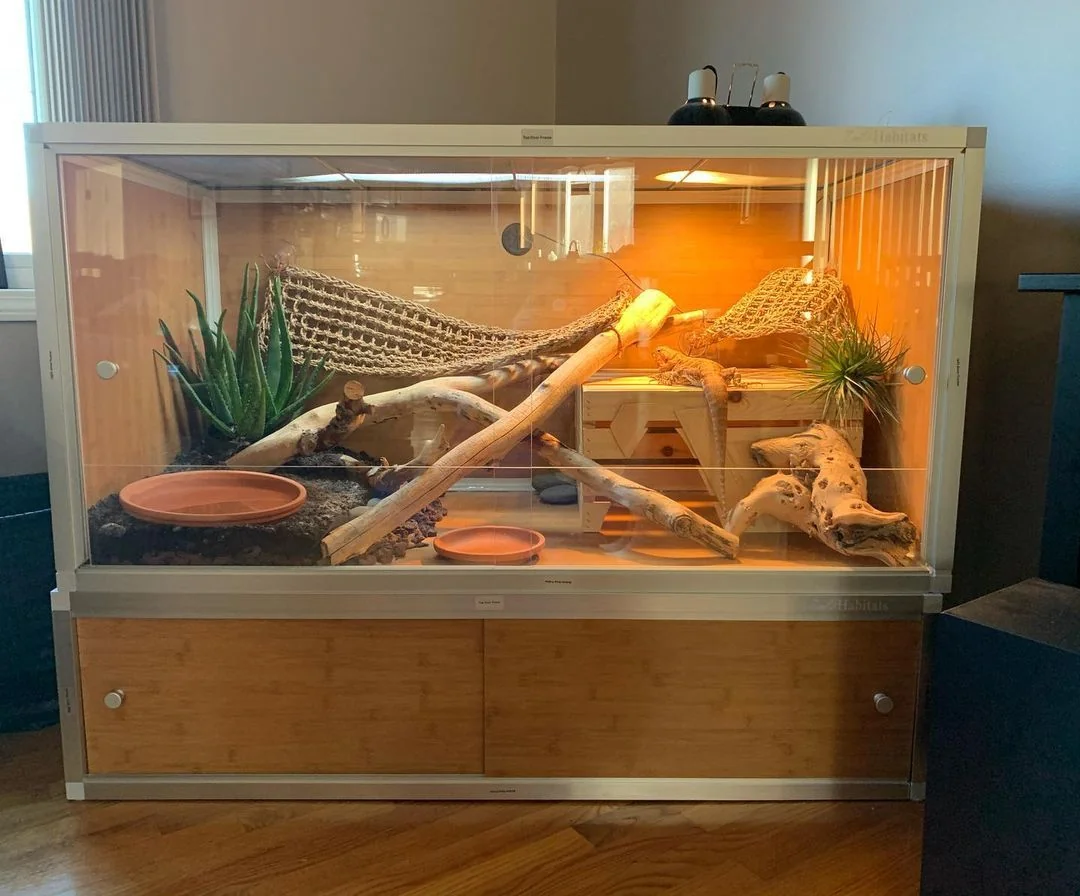
The Importance of Proper Lighting for Bearded Dragons
Lighting is a critical aspect of bearded dragon care, often overlooked by new owners. Unlike humans, these reptiles rely heavily on specific types of light for their health and well-being. Adequate lighting supports essential bodily functions, including vitamin D3 synthesis, calcium absorption, and thermoregulation. Without the correct lighting, your bearded dragon can develop serious health issues, such as metabolic bone disease (MBD), lethargy, and a weakened immune system. Understanding the different types of lighting fixtures and their specific purposes is the first step in creating a healthy and thriving environment for your pet.
Why is Lighting Crucial for Bearded Dragons?
Bearded dragons are diurnal, meaning they are most active during the day. They need both UVB (ultraviolet B) and UVA (ultraviolet A) light to thrive. UVB is essential for synthesizing vitamin D3, which is crucial for calcium absorption. Without sufficient UVB exposure, bearded dragons cannot properly absorb calcium from their diet, leading to MBD. UVA light helps regulate their behavior, appetite, and overall well-being. Providing these essential light sources is not just a convenience; it is a fundamental requirement for their survival and happiness. Ensure your setup always provides the correct levels of these vital lights.

Benefits of UVB and UVA Lighting
The benefits of UVB and UVA lighting are numerous and directly impact a bearded dragon’s health. UVB exposure is vital for the production of vitamin D3, which facilitates the absorption of calcium from food. Calcium is essential for bone health, muscle function, and overall body function. UVA light, on the other hand, stimulates natural behaviors, such as appetite and mating. It also enhances the lizard’s color vision and provides a sense of well-being. A proper balance of both UVB and UVA allows your bearded dragon to thrive, leading to a more active, vibrant, and healthy pet. Without these lights, your bearded dragon is likely to struggle.

Understanding the Different Types of Lighting Fixtures

Choosing the right lighting fixtures can seem daunting, but understanding the different types and their specific properties simplifies the process. Several types of fixtures are available, each with unique characteristics. Some fixtures combine UVB and heat, while others are purely for UVB or heat. The best choice depends on various factors, including tank size, your budget, and your dragon’s specific needs. Here’s a breakdown of the most common types to help you make an informed decision, ensuring your bearded dragon gets the best possible care.


1. Fluorescent Tube UVB Bulbs
Fluorescent tube UVB bulbs are a popular choice for bearded dragons. They typically provide a more even distribution of UVB rays across the enclosure, making them suitable for larger tanks. These bulbs come in various lengths and UVB output levels, allowing you to customize the lighting to your dragon’s needs. They are generally more energy-efficient than other types of bulbs, making them a cost-effective solution. Consider your tank size and the distance between the bulb and your dragon when choosing a fluorescent tube UVB bulb.
Advantages of Fluorescent Tube UVB Bulbs
- Even UVB distribution throughout the enclosure.
- Available in various lengths and UVB output levels.
- Energy-efficient and cost-effective.
- Suitable for larger tank sizes.
Considerations for Fluorescent Tube UVB Bulbs
- Need to be placed at the correct distance for optimal UVB exposure.
- UVB output degrades over time, requiring regular replacement.
- May need a separate heat source, depending on your setup.
2. Mercury Vapor Bulbs (MVB)
Mercury vapor bulbs (MVBs) are all-in-one solutions, providing both UVB, UVA, and heat. These bulbs are known for their intense UVB output, making them ideal for larger enclosures or dragons that need a strong UVB source. They also create a basking spot, which is essential for thermoregulation. However, MVBs generate significant heat, so it’s crucial to monitor the temperature in the enclosure and ensure your dragon can escape the heat if needed. MVBs can be an excellent choice for experienced reptile keepers.
Advantages of Mercury Vapor Bulbs
- Provides UVB, UVA, and heat in a single bulb.
- High UVB output, suitable for larger tanks.
- Creates a basking spot for thermoregulation.
Considerations for Mercury Vapor Bulbs
- Generate significant heat; careful temperature monitoring is essential.
- Can be more expensive than other types of bulbs.
- May not be suitable for smaller enclosures.
3. Compact Fluorescent UVB Bulbs
Compact fluorescent UVB bulbs are a smaller, more affordable option compared to tube bulbs. They are easy to install and fit into standard lamp fixtures. While they provide UVB, the coverage area is usually more concentrated than tube bulbs. These are an excellent option for smaller enclosures or as a supplemental UVB source. Proper placement is key to ensure your dragon receives adequate UVB exposure. Choose a bulb with the correct UVB output for your dragon’s needs and your enclosure size.

Advantages of Compact Fluorescent UVB Bulbs
- More affordable than tube bulbs.
- Easy to install and fit into standard fixtures.
- Good for smaller enclosures or supplemental UVB.
Considerations for Compact Fluorescent UVB Bulbs
- UVB coverage is more concentrated.
- Need to be placed at the correct distance for optimal exposure.
- UVB output degrades over time.
4. LED Lighting
LED lighting is rapidly gaining popularity in reptile keeping, offering energy efficiency and various light spectrums. While LED bulbs typically do not provide UVB, they can be used in conjunction with separate UVB bulbs to create a complete lighting system. They are available in various colors and can enhance the visual appeal of your bearded dragon’s enclosure. LED lights also produce very little heat, so they are perfect for providing ambient lighting and are easy to manage. Choose LED bulbs with the correct spectrum for your dragon’s needs.
Advantages of LED Lighting
- Energy-efficient and long-lasting.
- Available in various colors and light spectrums.
- Produce very little heat.
- Can be used with separate UVB bulbs.
Considerations for LED Lighting
- Does not provide UVB; needs to be paired with a UVB source.
- Requires careful selection of the correct light spectrum for your dragon.
5. Halogen Bulbs
Halogen bulbs are primarily used as heat sources in bearded dragon enclosures. They provide a focused basking spot that helps your dragon regulate its body temperature. While halogen bulbs do not produce UVB, they are effective for providing heat. You’ll need to pair them with a separate UVB bulb to ensure your dragon gets the complete lighting spectrum it needs. Always monitor the basking spot temperature to prevent overheating. Choose a bulb wattage that matches your enclosure size and your dragon’s specific heating requirements.
Advantages of Halogen Bulbs
- Provide intense, focused heat for basking.
- Effective for thermoregulation.
Considerations for Halogen Bulbs
- Does not provide UVB; requires a separate UVB source.
- Can get very hot; careful temperature monitoring is essential.
Choosing the Right Lighting for Your Setup
Selecting the right lighting for your bearded dragon setup involves considering several factors. First, evaluate your tank size, as this will influence the type and size of bulbs needed. Determine your dragon’s age and health, as juveniles and dragons with certain health conditions may need higher UVB levels. Consider your budget, as different bulbs vary in price and lifespan. Research reputable brands known for producing reliable reptile lighting. Choose the combination of lighting fixtures that meets your dragon’s specific needs and ensures optimal health and well-being. It’s recommended to consult with a veterinarian or experienced reptile keeper.
Tank Size and Lighting Needs
The size of your bearded dragon’s enclosure significantly influences your lighting choices. For smaller tanks, compact fluorescent bulbs or smaller MVBs may be sufficient. Larger tanks often require longer fluorescent tube bulbs or more powerful MVBs to provide adequate UVB coverage. Ensure that the chosen lighting covers the entire basking area, allowing your dragon to fully benefit from the UVB and heat. The distance between the bulb and the basking spot also matters; refer to the manufacturer’s recommendations to ensure optimal UVB output and avoid burns.
Positioning Lighting Fixtures for Optimal Exposure
Proper positioning of your lighting fixtures is as crucial as the type of bulbs you choose. The UVB bulb should be placed directly above the basking area, where your dragon spends most of its time. This ensures that it can effectively absorb UVB rays. The distance between the bulb and the basking spot should be within the manufacturer’s recommended range; typically, this is between 6 and 12 inches, but always consult the bulb’s specific guidelines. Use a reflector to direct light downward, maximizing the UVB exposure. Ensure the bulb is securely mounted and out of reach of your dragon to prevent burns or damage to the fixture.
Monitoring and Maintaining Your Lighting System
Regular monitoring and maintenance are essential to ensure your bearded dragon’s lighting system functions effectively. This includes replacing bulbs at the correct intervals, checking UVB output, and cleaning the fixtures. Consistent upkeep guarantees that your dragon continues to receive the necessary UVB and heat, contributing to its overall health. Neglecting these aspects can lead to health issues and decrease your pet’s quality of life. Make it a routine to check and maintain your lighting system regularly.
Replacing Bulbs at the Correct Intervals
All UVB bulbs lose their effectiveness over time, even if they still emit light. The UVB output diminishes gradually, so it’s essential to replace them regularly, typically every 6 to 12 months, depending on the type of bulb and manufacturer’s recommendations. Keep track of the bulb’s age and set reminders for replacement. Consider purchasing a new bulb before the old one burns out. Replacing bulbs on schedule will ensure that your dragon always has access to the required UVB levels, which helps with vitamin D3 synthesis. Neglecting to replace bulbs can lead to health complications.
Checking UVB Output with a Solarmeter
To ensure your UVB bulb is functioning correctly, it’s recommended to use a solarmeter. A solarmeter is a handheld device that measures the UVB output of your bulb. This tool provides precise readings, allowing you to verify whether the bulb is emitting the appropriate UVB levels for your dragon. Test the bulb regularly, especially after replacing it, and compare the readings to the manufacturer’s recommendations. If the UVB output is too low, it’s time to replace the bulb. Using a solarmeter offers an extra layer of protection, safeguarding your pet’s health.
Conclusion
Proper lighting is not just an accessory; it is a cornerstone of bearded dragon care. Selecting the right types of fixtures, positioning them correctly, and maintaining them meticulously will directly impact your dragon’s well-being. From choosing between fluorescent tubes and mercury vapor bulbs to regularly checking the UVB output, every step plays a role in creating a healthy environment. By understanding the specific requirements of UVB and UVA lighting, you can ensure your bearded dragon thrives, exhibiting vibrant colors, high activity levels, and a strong immune system. Providing the correct lighting is a commitment to your reptile’s long-term health and happiness. Remember to always consult with experienced reptile keepers or a veterinarian for personalized advice.