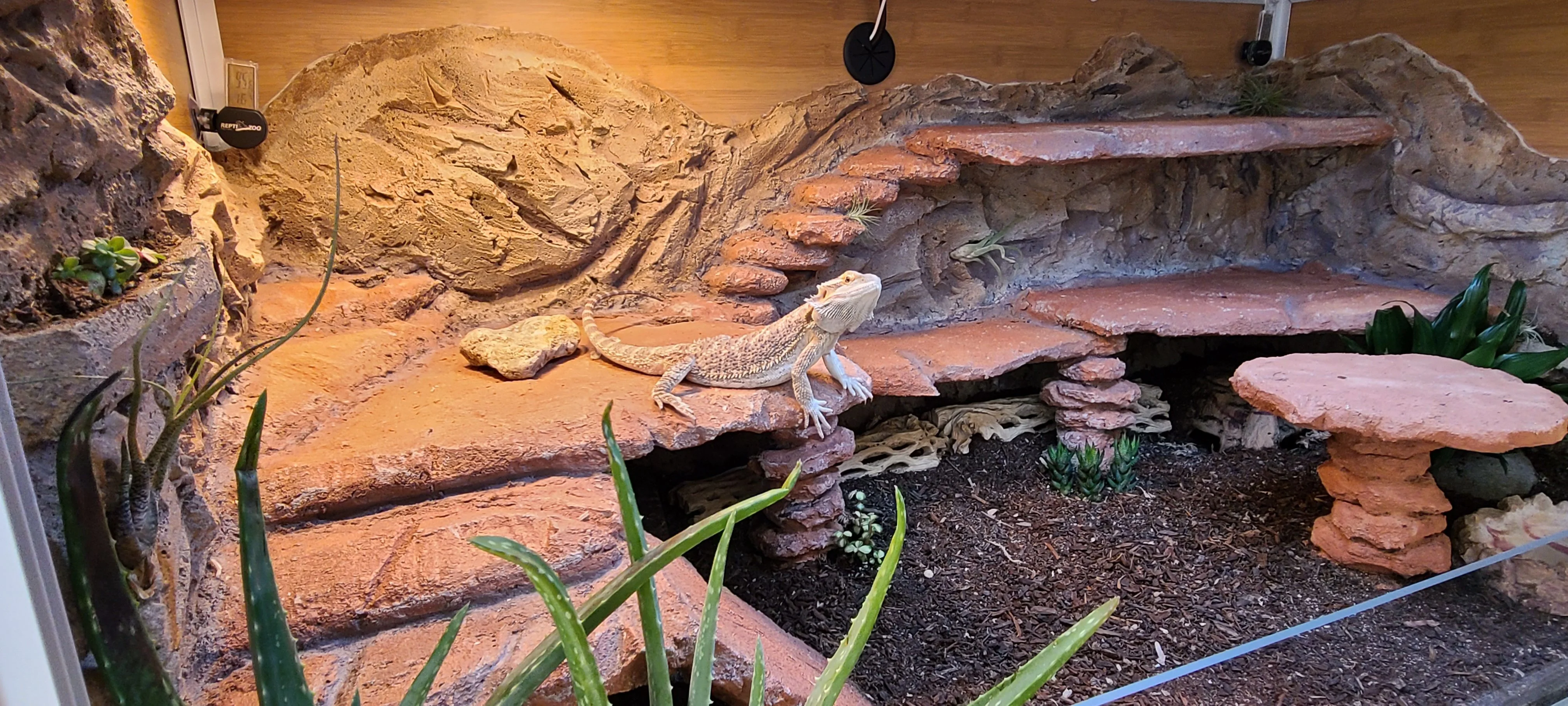
Choosing the Right Habitat Size for Your Bearded Dragon
Creating a suitable habitat is crucial for the health and happiness of your bearded dragon. The size of the enclosure is one of the most critical factors to consider. A cramped environment can lead to stress, poor appetite, and health problems. The general rule of thumb is to provide a habitat that allows your bearded dragon ample space to move around, bask, and explore. As a minimum, a single adult bearded dragon needs a 40-gallon breeder tank (36x18x18 inches). However, a 4x2x2 foot enclosure is highly recommended for adult bearded dragons, providing them with enough room to roam and exhibit natural behaviors. Larger enclosures are even better if space and budget allow, enabling a richer, more stimulating environment.
Indoor Habitat Essentials
Setting up the perfect indoor habitat involves several key components. The selection of a suitable tank is the first step. Glass tanks are popular, offering excellent visibility, but they can be heavy and require careful handling. Wooden enclosures, often with glass fronts, provide better insulation and are generally lighter. Ensure the tank is well-ventilated to prevent the buildup of humidity and potential respiratory issues. Placement of the enclosure in your home is also important; avoid drafts and direct sunlight, which can overheat the habitat. Provide hiding spots, such as hides or caves, for your bearded dragon to feel secure and reduce stress. The indoor habitat should mimic their natural desert environment.
Tank Size and Material Selection
The size of your bearded dragon’s tank should be appropriate for its age and size. As mentioned, a 40-gallon breeder tank is the minimum for an adult, but a larger enclosure is always preferable. For juvenile bearded dragons, you can start with a smaller tank and upgrade as they grow. The material of the tank also affects its usability. Glass tanks are common and readily available, providing a clear view of your pet. However, they can be heavy and can lose heat quickly. Wooden enclosures, especially those lined with waterproof materials, are more effective at retaining heat and humidity, crucial for temperature regulation. Regardless of material, the tank should be easy to clean and sanitize to maintain a healthy environment.
Substrate Options and Recommendations
The substrate, or flooring, of your bearded dragon’s enclosure plays a significant role in its well-being. The substrate should be safe, absorbent, and easy to clean. Avoid substrates that can cause impaction, such as sand, especially for juvenile dragons, as they may ingest it. Safe substrate options include reptile carpet, paper towels, and non-adhesive shelf liner. These are easy to clean and replace, reducing the risk of bacterial growth. For a more naturalistic look and feel, consider using a bioactive substrate made of a mixture of organic materials like soil, sand, and clay, along with live plants and cleanup crew insects. This provides enrichment and helps with waste decomposition, but it requires careful management to ensure proper balance.
Lighting and Heating Setup
Bearded dragons require a specific temperature gradient and UVB lighting to thrive. A basking spot of 100-110°F (37.7-43.3°C) is essential for digestion and metabolism, achieved using a heat lamp. The cooler side of the tank should be around 80°F (26.6°C). Use a thermostat to regulate the temperature and prevent overheating. UVB lighting is crucial for calcium absorption and bone health. Place a UVB bulb that covers at least two-thirds of the enclosure. Replace the UVB bulb every six months, as its effectiveness diminishes over time. Provide a full spectrum of light with UVA and UVB to mimic the natural sun, helping your bearded dragon to thrive.
Outdoor Habitat Considerations


Allowing your bearded dragon to spend time outdoors can provide numerous benefits, including exposure to natural sunlight and a more stimulating environment. However, creating a safe and secure outdoor habitat is paramount. The outdoor enclosure should protect your pet from predators, such as birds, cats, and dogs, and prevent escape. The enclosure should be made of sturdy materials, such as wire mesh or secure fencing. Ensure the enclosure is placed in a location that receives adequate sunlight but also offers shaded areas for your bearded dragon to regulate its body temperature. Provide water sources and a variety of enrichment items, such as branches, rocks, and hiding places, to encourage natural behaviors and reduce stress.

Enclosure Security and Safety
The primary concern when planning an outdoor habitat is security. Predators can pose a significant threat to your bearded dragon, so the enclosure must be predator-proof. Use sturdy materials such as hardware cloth or wire mesh, ensuring there are no gaps large enough for predators to enter. The enclosure should also be escape-proof. Bearded dragons are surprisingly agile, so the enclosure should have a secure lid or top. Check the enclosure regularly for any signs of damage or potential weaknesses. The location of the enclosure is also important; avoid areas with overhanging branches or structures that predators might use to access the habitat. Regularly inspect the area for any risks.

Temperature Regulation in Outdoor Habitats
Temperature regulation is critical in an outdoor habitat. Bearded dragons are ectothermic, meaning they rely on external sources to regulate their body temperature. Provide a basking area where the temperature reaches 100-110°F (37.7-43.3°C). Ensure that there are cooler areas and shaded spots where your bearded dragon can escape the heat. Monitor the temperature throughout the day using a thermometer. Offer a shallow water dish in a cooler part of the enclosure to allow your dragon to cool down. It’s important to bring your bearded dragon indoors if the temperature drops below the safe range for their species.

Protecting from Predators and Pests
Besides the physical structure of the enclosure, protecting your bearded dragon from predators and pests requires vigilance. Regularly inspect the enclosure for any signs of potential breaches. Keep the area around the enclosure clear of debris and potential hiding places for predators. Use pest control methods, such as natural repellents, to prevent insects from entering the enclosure. If you notice signs of predators, such as droppings or tracks, take immediate action to secure the enclosure further. Consider using motion-activated cameras to monitor the enclosure and identify any threats. Prevention is key to ensuring your bearded dragon remains safe.
Creating a Naturalistic Outdoor Environment
A naturalistic outdoor environment provides enrichment and stimulation for your bearded dragon. Include a variety of elements to mimic their natural habitat. Provide a variety of rocks, branches, and logs for climbing and basking. Use natural substrate materials, such as sand and soil, to allow for digging and burrowing behavior. Plant native, non-toxic plants to provide shade and cover. Ensure these plants are safe for your bearded dragon. Offer a water source, such as a shallow dish or a small pond, for drinking and bathing. The goal is to provide a space that mimics the natural environment, encouraging natural behaviors and promoting a happy, healthy life for your bearded dragon.
Combining Indoor and Outdoor Habitats
Providing both indoor and outdoor habitats offers the best of both worlds. During favorable weather conditions, your bearded dragon can enjoy the benefits of outdoor exposure. Having an indoor habitat provides a safe, climate-controlled environment when outdoor conditions are unsuitable. This also allows for a more enriched life for your pet, with the chance to interact with different environments, explore, and get natural sunlight. Regularly monitoring your bearded dragon’s behavior and health is important. Always supervise your bearded dragon while it is in an outdoor habitat and provide a way for it to retreat indoors if it gets too hot or cold, or feels threatened.
Transitioning Between Environments
Transitioning between indoor and outdoor environments should be done gradually to minimize stress and prevent temperature shock. Acclimatize your bearded dragon to the new environment slowly. Start with short periods of time outdoors and gradually increase the duration as the weather permits. During the transition period, closely monitor your bearded dragon for any signs of stress, such as changes in appetite, behavior, or activity levels. Provide a safe, climate-controlled indoor environment as a retreat if needed. Always ensure your bearded dragon’s safety during the transition, and ensure it is never exposed to extreme temperatures or potential predators.
Monitoring and Maintaining Habitat Conditions
Regular monitoring and maintenance are essential to ensure your bearded dragon’s habitat remains healthy and safe. This involves checking temperature and humidity levels, cleaning the enclosure, and providing fresh food and water. Routine inspections will help you identify any issues early, allowing you to take action to protect your pet’s health. A clean and well-maintained habitat contributes to the overall well-being of your bearded dragon, promoting its health and happiness.
Cleaning and Hygiene Practices
Maintaining a clean habitat is crucial for preventing the spread of disease. Spot-clean the enclosure daily, removing any feces or uneaten food. The frequency of a full cleaning depends on the substrate used. If using reptile carpet, replace it weekly, or more often if soiled. If using loose substrate, a full cleaning, including substrate replacement, should occur at least once a month. Clean and disinfect the entire enclosure, including all decorations and accessories, with a reptile-safe disinfectant. Rinse everything thoroughly to remove any residual disinfectant. Practicing good hygiene will reduce the risk of illness and promote a healthy environment for your bearded dragon.
Regular Health Checks and Observation
Regular observation of your bearded dragon is vital for identifying potential health problems early. Observe your pet’s behavior, appetite, and activity levels daily. Look for any signs of illness, such as lethargy, loss of appetite, diarrhea, or respiratory problems. Check your dragon’s skin for any unusual bumps, lesions, or parasites. Inspect the eyes, nose, and mouth for any discharge or swelling. Regular health checks should also include weighing your bearded dragon regularly, and it is recommended to schedule annual checkups with a qualified reptile veterinarian. Early detection and treatment of health problems are key to ensuring a long and healthy life for your bearded dragon.
